New reflection
Why I'm Starting This
Read Amulya's personal reflection on music, friendship, STEM curiosity, and why she created Beats for the Brave.
A student-led learning journey
A personal journey of learning, listening, and discovering how students can support children and families facing health challenges.
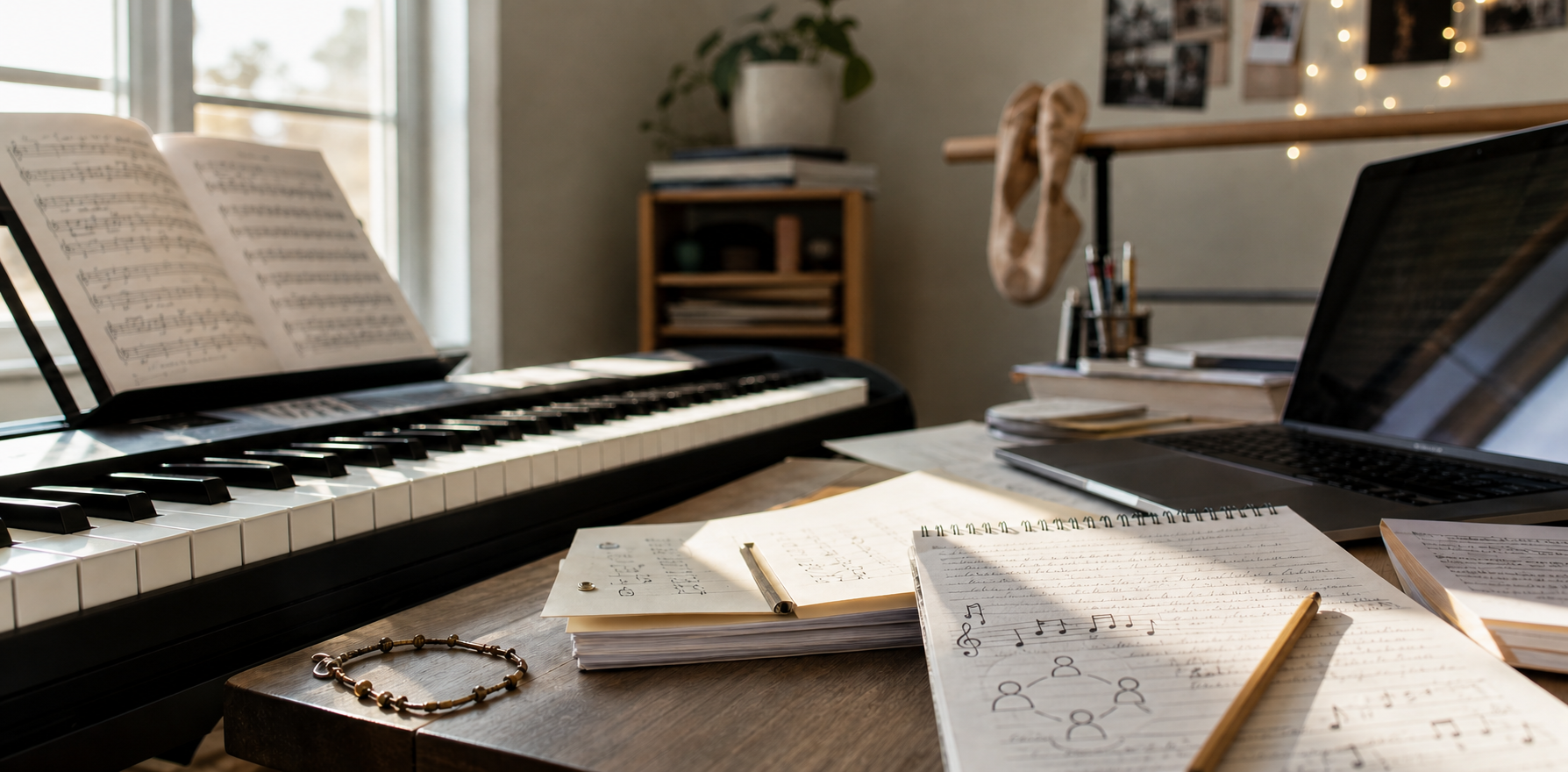
Hi, I'm Amulya Kuntamukkala, a rising 9th-grade student from Plano, Texas. Through choir, piano, music theory, Bharatanatyam, theater, and computer science, I've seen how creativity can bring people together.
Beats for the Brave is where I'm documenting my early exploration of how music, creativity, technology, and peer connection might help children and families feel supported during difficult health journeys.
This is not a nonprofit launch. I'm starting by listening, learning from existing organizations, and understanding where students may be able to help in thoughtful and meaningful ways.
New reflection
Read Amulya's personal reflection on music, friendship, STEM curiosity, and why she created Beats for the Brave.
From the learning journal
Amulya reflects on a Berklee neuroscience course—and the question about comfort in music that inspired her science fair project.
Podcast now live
The first episode is live. Follow along as Amulya shares reflections, questions, and conversations from this student-led learning journey.
About Amulya
Music, storytelling, STEM, and community impact are all part of how Amulya is approaching this project.
Amulya Kuntamukkala is a rising high school student from Plano, Texas, with interests spanning music, storytelling, STEM, and community impact.
Amulya's creative journey began early. In elementary school, she was already performing music and composing original pieces, including a piano composition titled "Sorrow." Since then, she has continued to grow through choir, piano, musical theater, music theory, composition, writing, podcasting, blogging, and STEM.
Her musical experiences include choir, piano, musical theater, music theory, composition, and performance. During middle school, she was selected for All-Region Choir, earned Superior+ ratings at the TMEA Music Festival, received the PISD Exemplary Soloist Award for three consecutive years, and was honored with the Directors' Award from the Renner Middle School Choral Department. She also performed the lead role in Aladdin Jr.
Beyond music, Amulya enjoys writing, podcasting, drawing, and exploring STEM topics. She is a three-time recipient of the PISD Superintendent's Scholar Award, qualified for District and Regional Science Fair in both 7th and 8th grade, and received a state-level Honorable Mention for Writing.
Through Beats for the Brave, Amulya combines her interests in music, creativity, communication, and problem-solving as she explores how connection and community can support children facing health challenges.
I enjoy both creative and analytical subjects. Music teaches me expression, collaboration, and storytelling. STEM teaches me to ask questions, investigate problems, look for patterns, and think critically. Through Beats for the Brave, I'm combining both perspectives as I learn from experts and explore how creativity, technology, education, and community can help children feel more connected during difficult times.
Highlights
A few meaningful experiences that inform Amulya's curiosity, discipline, and love of creative work.
Why this matters
They can affect connection, confidence, routine, and joy. While medical care is the most important priority, emotional support and human connection also matter.
I'm interested in learning how students can contribute in ways that are responsible, respectful, and genuinely useful. I am not trying to provide music therapy or make medical claims. Instead, I want to explore how music, creativity, friendship, and technology might help create moments of encouragement and connection.
Before building anything, I want to understand what families, healthcare professionals, educators, volunteers, and community organizations actually need.
Research-minded exploration
The goal right now is not to have all the answers. It is to ask thoughtful questions and learn from people with real experience.
What kinds of student-led support are helpful, age-appropriate, and respectful for children and families?
Can songs, performances, playlists, stories, or shared creative projects help children feel encouraged or remembered?
Where are there gaps that students might help address without duplicating what established organizations already do well?
Could simple digital tools, AI-assisted creativity, or online platforms help students share music and encouragement more personally?
What do nonprofit leaders, healthcare professionals, music therapists, educators, families, and volunteers wish young people understood first?
Organizations I'm learning from
Part of this journey is learning from people and organizations with experience. I want to understand what they do well, what challenges they face, and how student-led efforts can be helpful.
Exploring how music can support children through healing, connection, and creative experiences.
Learning how music-based community programs can support young people and expand access to creative opportunities.
Understanding how community support, awareness, and family-centered programs can help children facing cancer.
Learning about the role of music in supporting children with serious or chronic conditions.
Ideas in progress
These are not finished programs. Each idea needs more research, feedback, and guidance.
A possible peer-to-peer connection idea where students could share songs, messages, or creative encouragement with children who may be going through difficult health experiences.
Learning question: Would this feel meaningful to children and families? What safety, privacy, and adult supervision would be needed?
A creative project where students might record short performances, read stories, or create personalized messages connected to music, theater, or dance.
Learning question: How can creative content feel personal and supportive without being overwhelming, generic, or performative?
A future possibility where students interested in music, art, theater, dance, or technology could learn how to support existing organizations through respectful service.
Learning question: What kind of training, structure, and partnerships would be necessary before students get involved?
Call to action
If you have experience supporting children, families, music programs, healthcare communities, or student service projects, your perspective would mean a lot.
I'm especially interested in short discovery conversations that can help me better understand what is helpful, what is needed, and what young people should consider before starting a project in this space.