This summer, I took a Coursera course called The Neuroscience of Music and Emotion, offered by Berklee and taught by Susan Rogers, PhD. I’ve always loved music—choir, piano, and musical theater—but I wanted to understand it from a different angle: what is actually happening in the brain when we listen?
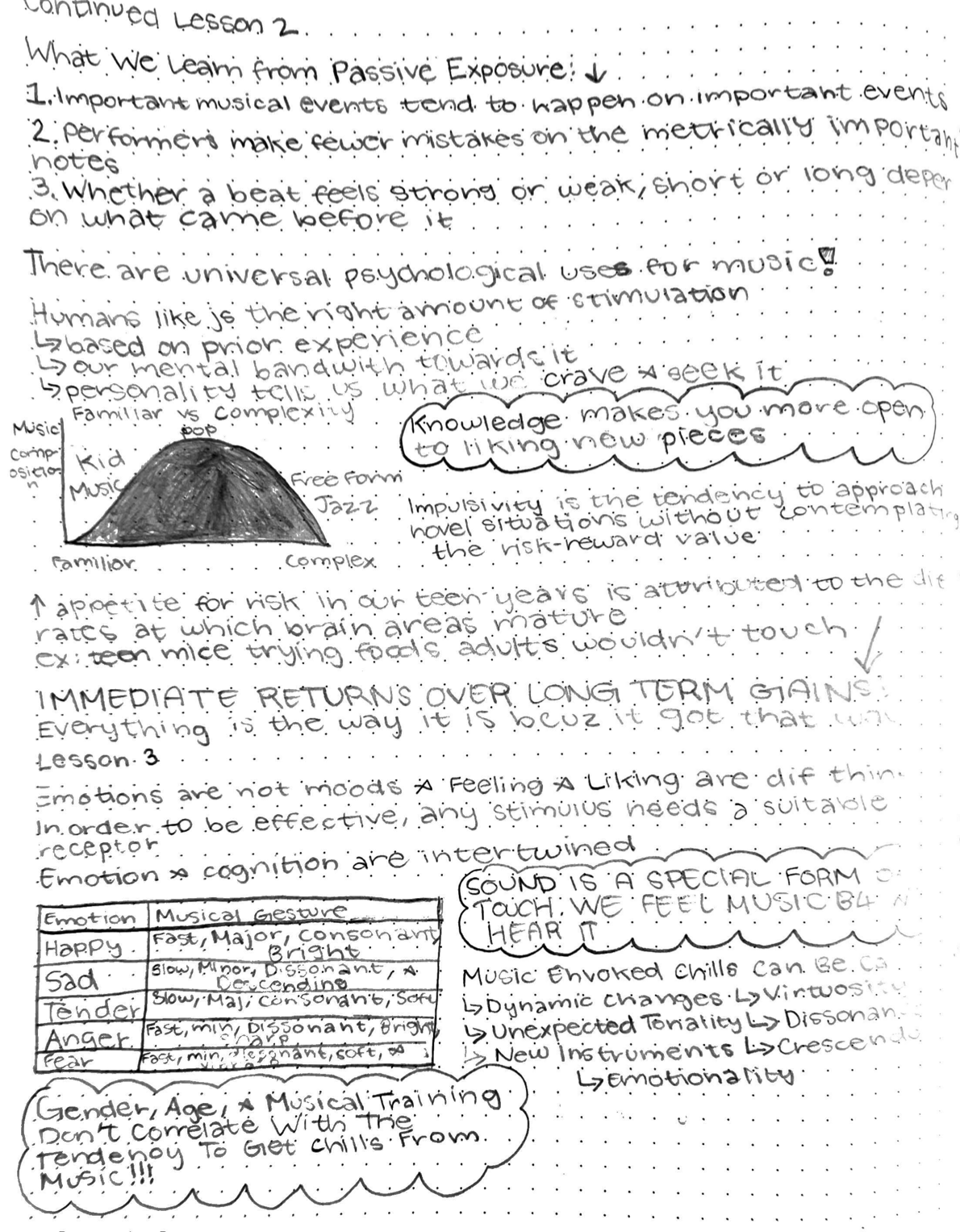
I filled pages with notes. Here are a few of the ideas that stayed with me.
Music and dopamine
I learned that listening to music you enjoy can engage the brain’s dopamine-based reward system, even if you are not moving or singing along. Dopamine helps mediate pleasure and reward. That is part of why a song can feel so good even when nothing else is happening around you: your brain is responding as you listen.
Different emotions have musical “fingerprints”
One of the most useful things I wrote down was a table showing how emotions are commonly associated with musical qualities such as tempo, key, consonance, brightness, and softness:
- Happy: fast, major, consonant, and bright
- Tender: slow, major, consonant, and soft
- Sad: slow, minor, dissonant, and descending
Happy and tender share a lot: the same kind of key and the same smoothness. Tempo and softness help separate them. That detail got me thinking about my science fair project. If “happy” and “tender” can be musically close but people describe them as different feelings, could you measure the line between them?
Your brain is making predictions
One of the course’s big ideas is that much of our pleasure in music comes from prediction. Your brain is constantly anticipating the next note or beat. When music confirms or violates that expectation, the difference can intensify your emotional response. A key change, a swell in the instruments, or an unexpected pause can sometimes give you chills because your brain did not see it coming.
Another line in my notes surprised me: according to research discussed in the course, gender, age, and musical training did not correlate with whether someone experienced chills from music. That helped me decide not to build my project around traits such as age or gender. They did not seem like reliable dividing lines for musical emotion.
Sad music can feel good
We also discussed why people enjoy sad songs, which sounds contradictory at first. When you are listening, there may be no real-life reason to be sad, so the music can create a safe form of sadness. A sad song can also feel like companionship when you are alone. The course notes also compared how often this response appeared among women and men, adults and children, and musicians and non-musicians—questions I would want to investigate further before drawing conclusions.
Liking a song and wanting a song
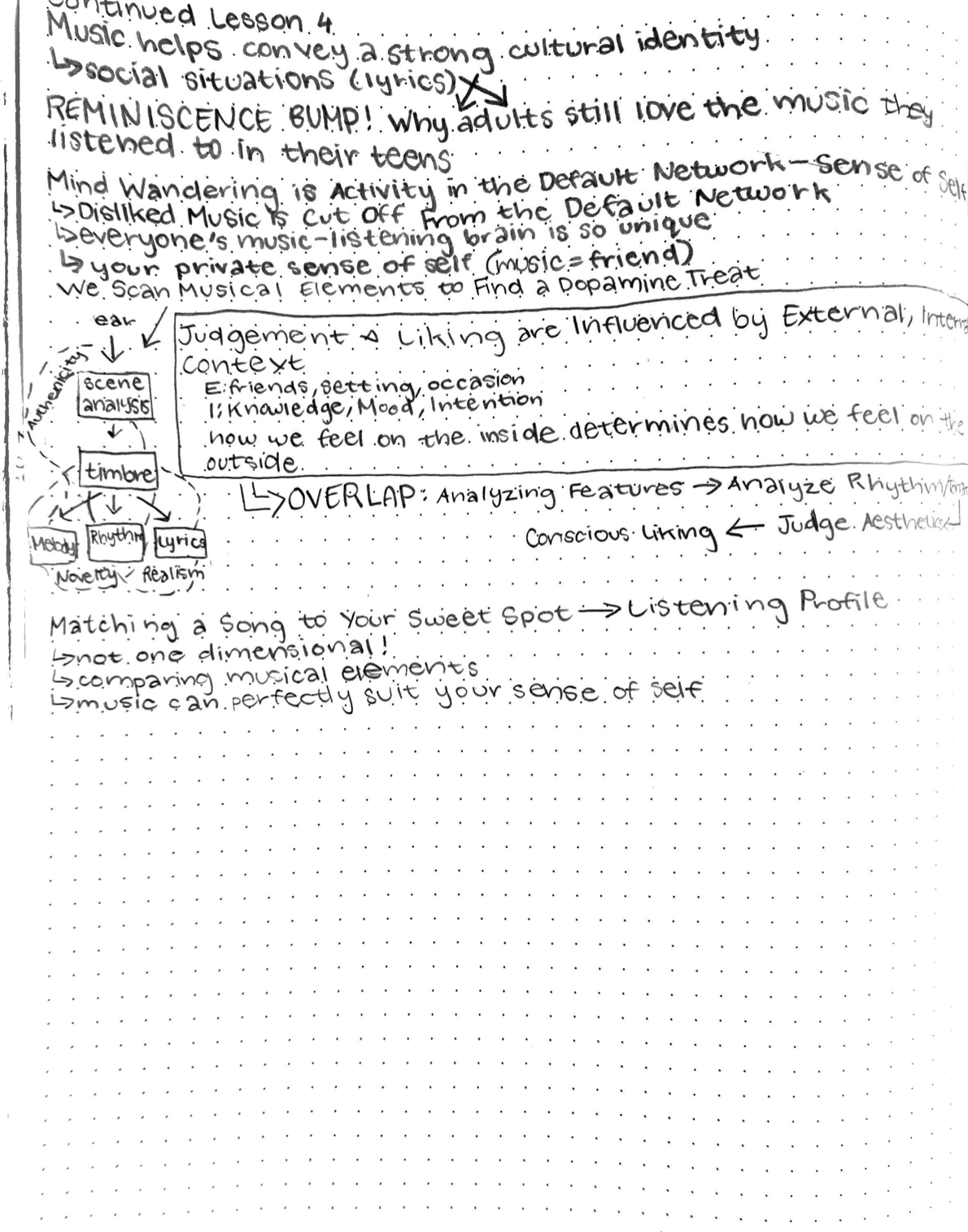
The course distinguished the immediate response of liking music from the motivational pull of wanting to hear it. I also learned about the brain’s default mode network, which is active during mind-wandering and connected with our sense of self. The course described disliked music as showing less connection with this network, while loved music can become more closely integrated with it. I liked the idea that music can become part of our private sense of who we are.
The “reminiscence bump”
I also learned about the reminiscence bump: one reason adults often continue to love music from their teenage years. The emotional value of music can be especially strong during adolescence, which may be why a song from someone’s high school years still feels different decades later.
How this connects to my science fair project
These ideas led me to my project: testing whether specific, measurable qualities of a song—such as tempo, dynamics, timbre, and tonality—can help predict whether people describe it as “comforting” or “tender” instead of simply “happy.” I want to see whether a reaction that feels personal and subjective can be studied with data.
This question feels personal because of Beats for the Brave. If we can learn more about what makes music feel comforting, that knowledge might eventually help people choose music more intentionally for children going through difficult health situations—music meant to feel safe, not merely upbeat.
I am still early in this project, but I wanted to share where the idea began: a mix of curiosity, a fascinating course, and a notebook full of questions.
Course completion
The Neuroscience of Music and Emotion
Amulya completed this online Berklee course through Coursera on August 7, 2026. The certificate is included here as supporting documentation for this learning journal.
View certificate PDF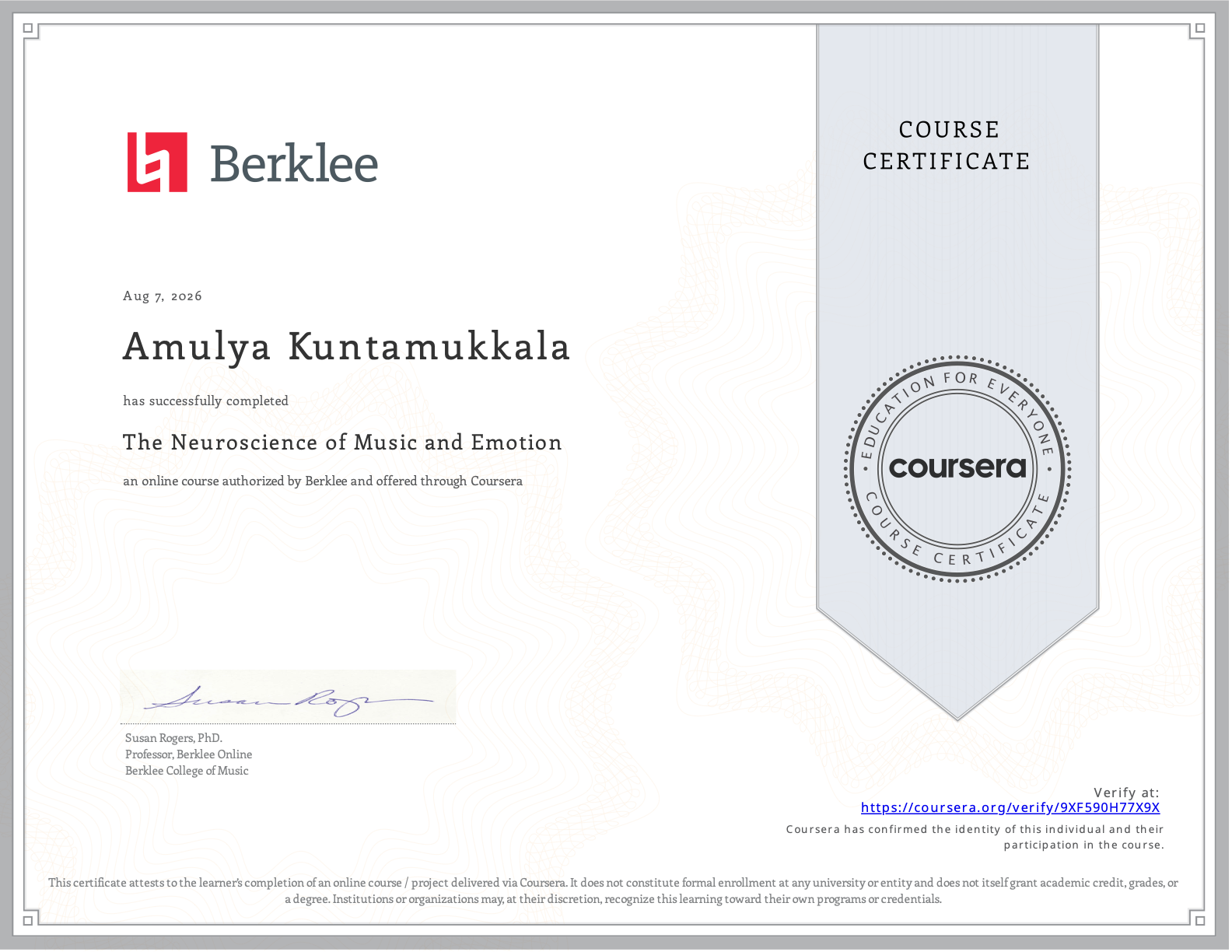
Course reference
Instructor: Susan Rogers, PhD, professor at Berklee College of Music. Her work focuses on auditory memory, music perception and cognition, and psychoacoustics.
Course: The Neuroscience of Music and Emotion, offered by Berklee through Coursera.
A note on scope: This post shares my course reflections and the questions they inspired. It does not provide medical advice or claim that music has the same effect on every listener.